
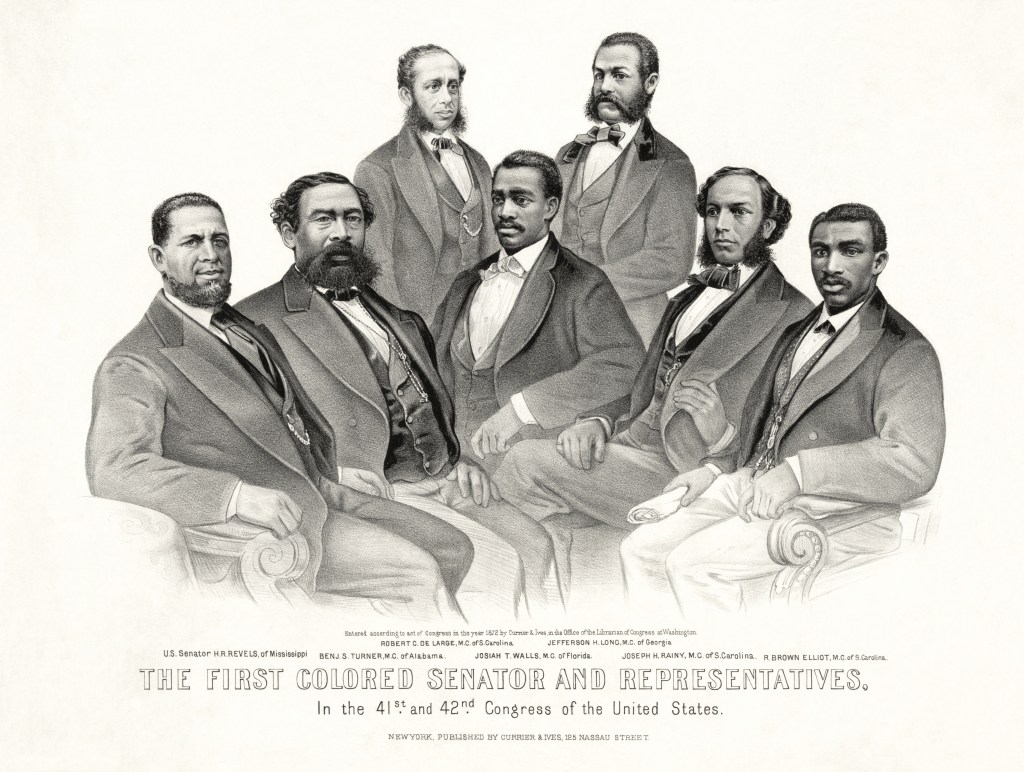
Each of the men in the above depiction appear to be super serious, which makes sense, considering what it took for them to enter the halls of the U.S. Congress as custodians of a government which described Black people as 3/5th of a man. Some of them were born into slavery. Some of them were born free. No matter what, the circumstances of their birth and the color of their skin gave them few options, until the completion of a Civil War that nearly ripped the country in two.
Today we call that era of American History Reconstruction, a type of Interregnum, if you will. From the end of the Civil War up until 1877 Black freedmen were able to vote and run for office. The men depicted above were not the only Black men to hold public office in the South and the North, but they were some of the most noted, because they won seats in the U.S. Congress. One of those men, was Hiram Revels.
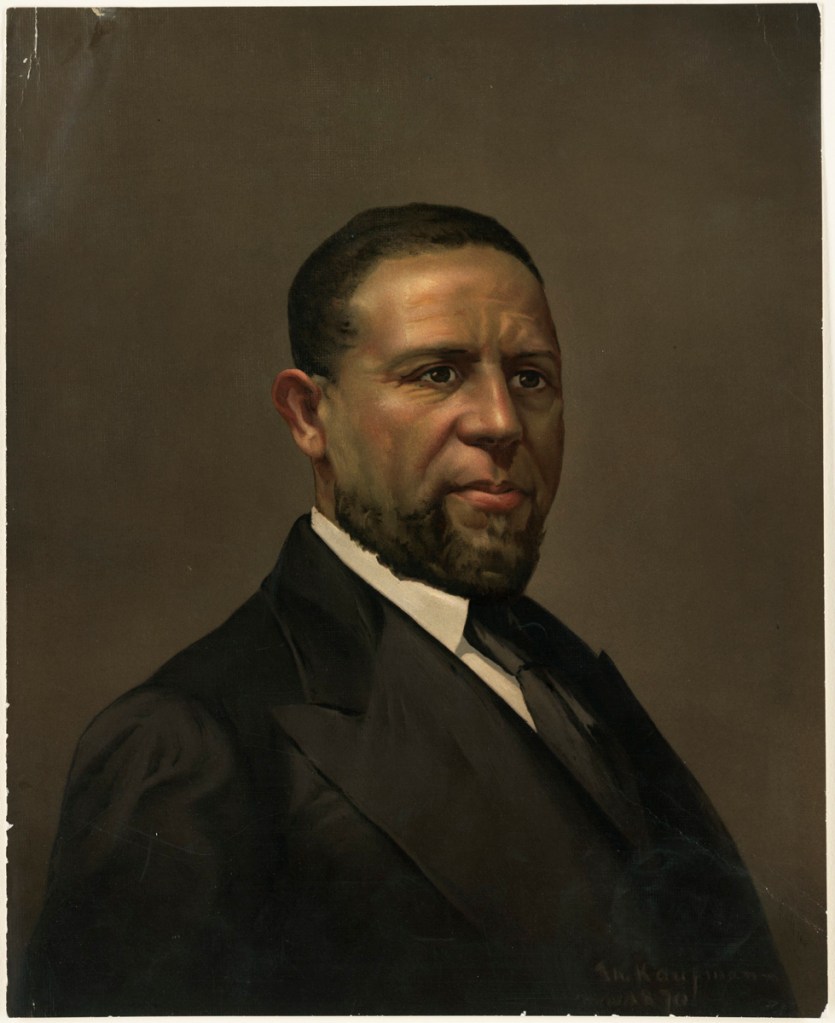
Senator Hiram Rhodes Revels only served 2 years of a 6 year term, vacated by Albert G. Brown at the outbreak of the Civil War in 1865, since Brown, an avid supporter of slavery and its expansion into Mexico and Central America backed the Confederate States of America (CSA) and their cause.
The life of Hiram Revels and the other congressmen depicted above was significant, in another way, as well. The period from 1867-1877 has been dubbed Reconstruction.
What is often overlooked is the role that Northern Republicans, members of the Party of Lincoln, played in ending Reconstruction and ushering in a reign of terror in Black communities across the country, not just the states that made up the CSA. The Northerners have been given a free pass for much too long. If you’re familiar with the Hayes/Tilden Compromise of 1877, then you already know where I’m coming from. For those of you who do not have a clue. This compromise between the Northern Republicans, who supposedly freed the slaves and the Southern Slaveowners (Democrats) literally threw Black folks under the bus and then backed up over us.
The Presidential election of 1876 was significant to Black people for one reason and one reason only. This election was won by a Northern Democratic governor of New York. In 1876 Samuel J. Tilden, a Lincoln supporter and opponent of slavery, won his race against Ohioan, Rutherford B. Hayes. In spite of this fact he was never sworn in as president.
This is where the story really takes a twist. Tilden won the popular vote, while Hayes was just shy of enough Electoral College votes to win the election. Without any written evidence an accepted historical fact that there was a compromise between the Republicans and the Democrats; which removed Federal troops from the former Confederate States and added 20 electoral college votes to Hayes’ total, allowing him to assume the presidency. Without the Federal troops Black progress was thwarted until 11/13/2026, with the election of Scott Colom as a U.S. Senator representing the Great State of Mississippi.
The election of President Hayes ushered in the Jim Crow era of racial segregation, from 1913-1954, officially. Unofficially, segregation and racial discrimination continue under various guises, which make it appear to have disappear, when in fact its still with us

